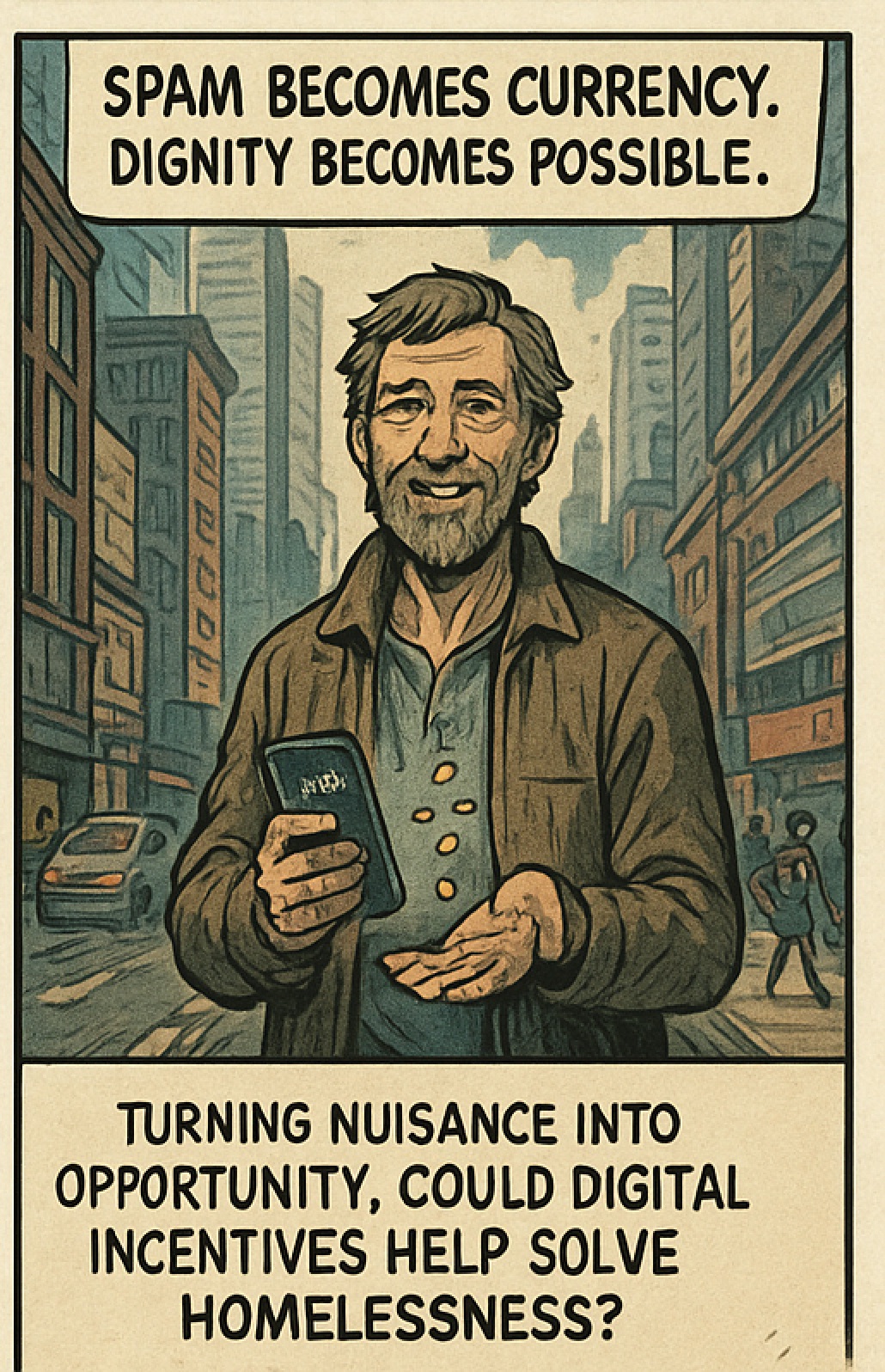
Could Digital Communication Incentives Help Solve Homelessness?
When we think about solving homelessness, our minds go straight to housing, shelters, or government aid. But what if the solution could also come from an unexpected place—the way we use our phones and email every day?
That’s right: the same spam calls and scam emails that annoy the rest of us could actually become a source of income for people living on the margins.
The Story of Dan
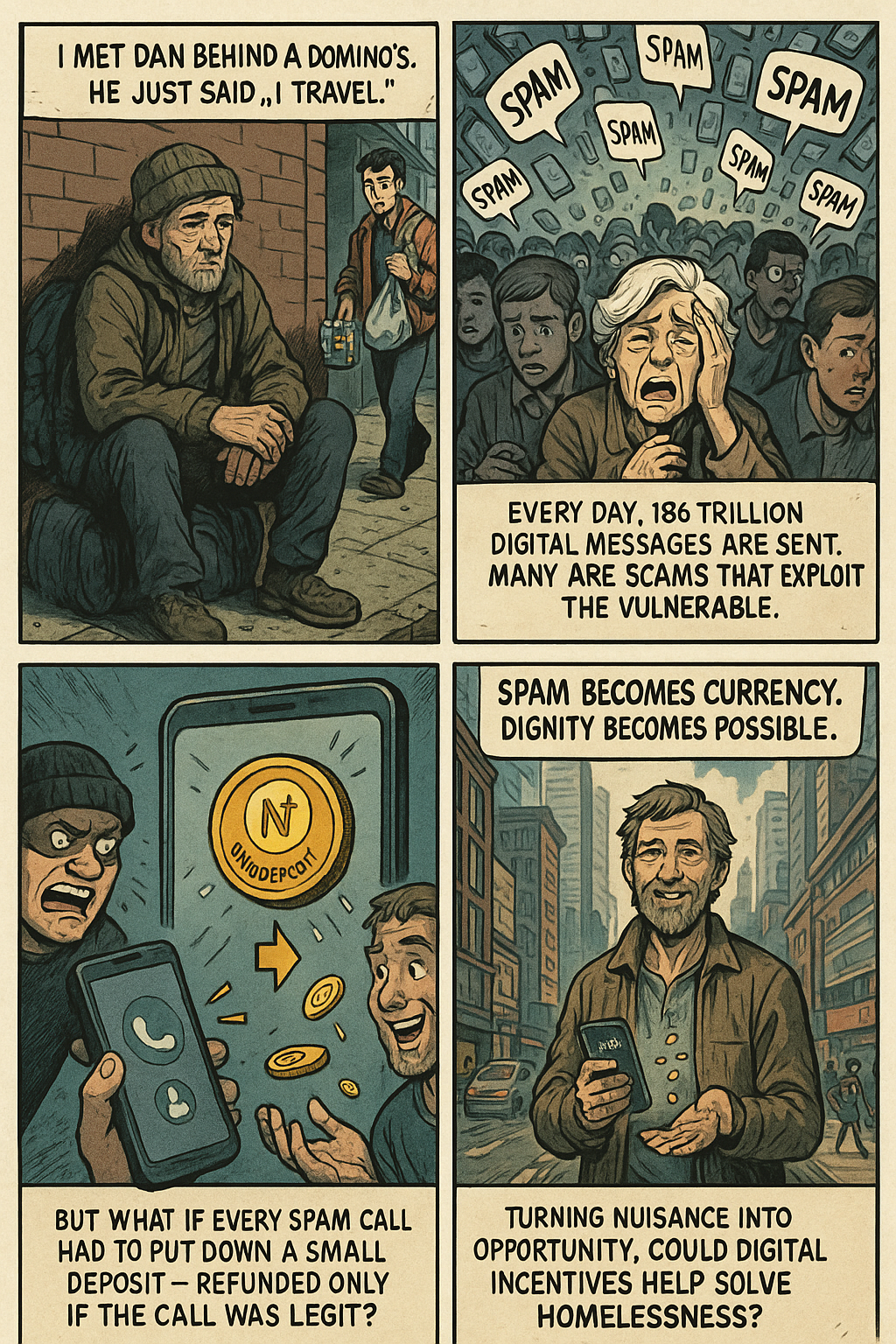
I recently met Dan, a man sitting behind a Domino’s, backpack by his side, who told me simply: “I travel.” At first glance, he looked like just another homeless wanderer, but as we talked, I realized something deeper.
Dan reminded me of the countless vulnerable people who not only struggle with income but are also the prime targets of scams—the elderly who lose their savings to fraud, the unhoused who get tricked into predatory schemes.
And then it hit me: what if technology could flip this script? What if Dan, instead of being targeted, could get paid every time someone tried to contact him?
How It Works: From Spam Call to Small Payout
Here’s the big idea. A new technology called FynCom has created a system where unknown callers have to put down a small deposit to reach you.
If the call is legit and lasts longer than 25 seconds → the caller gets their money back.
If it’s spam or unwanted and you hang up → you keep the deposit.
It’s already live through apps like KarmaCall (for phone spam) and FynMail (for email filtering). People are literally getting paid to block spam.
Now Imagine This for the Homeless
For someone like Dan, a phone with this technology could:
- Turn spam calls into cash (small payouts, but steady).
- Provide a banking alternative—payouts can be redeemed as gift cards or cryptocurrency.
- Offer a sense of agency: instead of being a victim of the system, you’re rewarded for your attention.
It’s not charity. It’s not a handout. It’s a new form of digital work—earning by engaging (or not engaging) with communication.
Why This Could Matter
Scale: Every day, 186 trillion digital messages are sent worldwide. That’s 134x more than financial transactions. Even skimming a fraction of this volume could sustain income streams for vulnerable populations.
Dignity: It’s voluntary, simple, and doesn’t require resumes, interviews, or proof of residence.
Future-Proofing: As AI makes scams more convincing, economic filters like this may become the only way to separate good faith communication from fraud.
A Cyberpunk Twist on Philanthropy
We’ve always thought of spam as a nuisance. But in this new model, spam becomes currency. And the people most in need—those who’ve fallen through society’s cracks—could be the first to benefit.
It’s a little radical. A little cyberpunk. But also deeply practical.
Because if we can turn unwanted communication into opportunity, maybe we can also turn homelessness into something solvable—not just with housing, but with dignified, digital income streams.
Final Thought
Next time your phone rings with a spam call, think about this: That same call could be paying for someone’s meal, shelter, or even a path back into society.
Spam won’t save the world—but reversing its economics just might.
⚡ Would you share this idea? Sometimes the wildest solutions are the ones worth talking about.
Comic: “Digital Alchemy” (4 Panels)

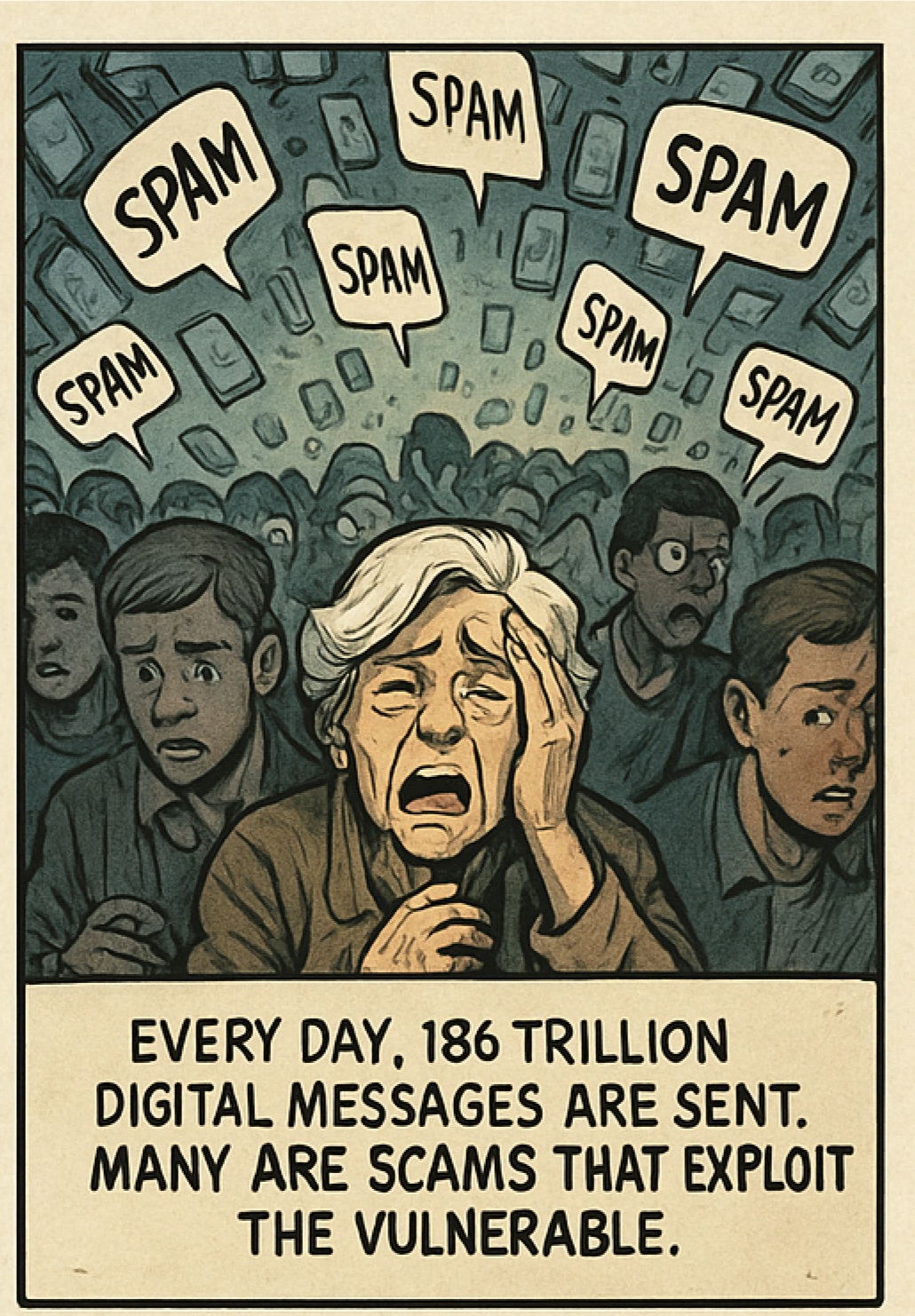
Every day, 186 trillion digital messages are sent. Many are scams that exploit the vulnerable.
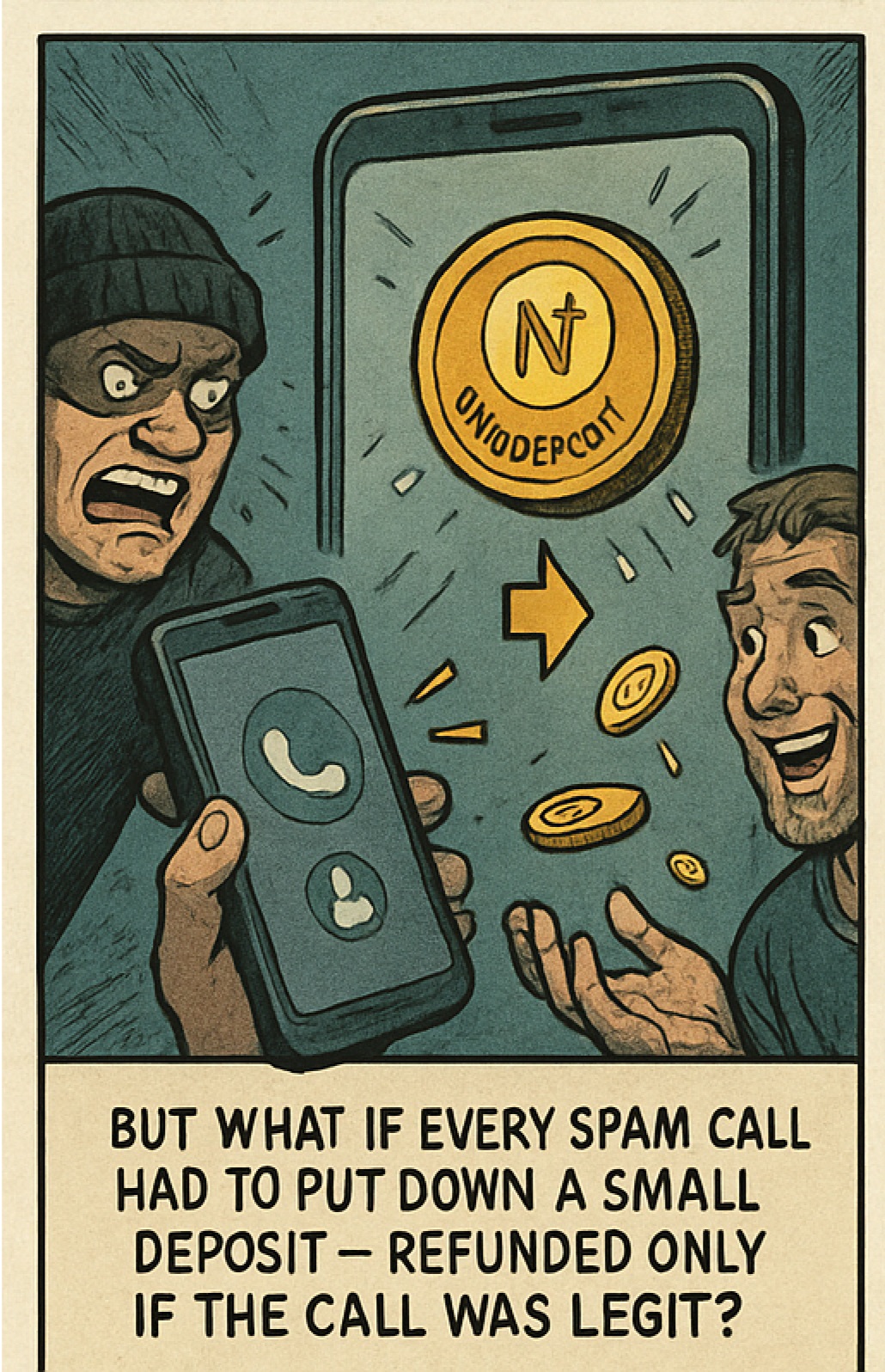
But what if every spam call had to put down a small deposit—refunded only if the call was legit?